8 Signs Fire and Smoke Damage Is Hiding in Your Atherton Home
Quick Answer
After a fire, signs of hidden smoke damage include a persistent burnt odor, soot deposits inside HVAC vents, yellowing on walls and ceilings far from the fire zone, and discolored electrical outlet covers. Many of these signs appear in rooms that never showed visible flame or direct damage during the event.
Fire and smoke damage restoration in Atherton homes begins with knowing what to look for, and many of the most telling signs are not in the room where the fire burned. Smoke and soot travel through every opening in a building, including wall cavities, HVAC ducts, and gaps around electrical outlets, reaching rooms that show no visible fire damage at all. If your Atherton property has had any kind of fire event, even a contained kitchen fire or a fireplace failure, these eight signs tell you whether the damage goes further than the surface you can see. Catching hidden contamination early is the difference between a focused remediation project and a whole-house restoration that costs significantly more and takes weeks longer.
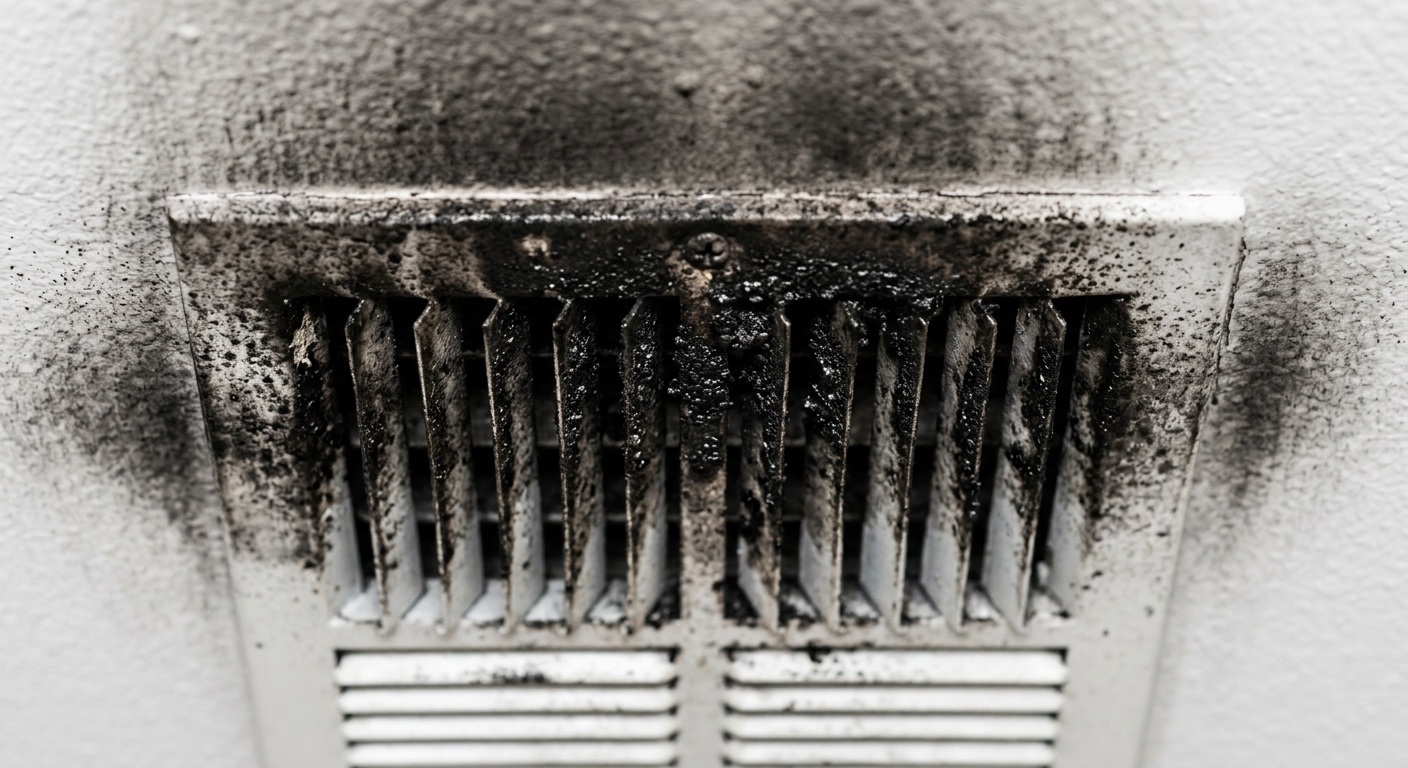
Soot buildup on HVAC vents is one of the clearest indicators that smoke has traveled through the duct system.
1. A Persistent Burnt Smell That Does Not Go Away
The most reliable early indicator of hidden smoke contamination is an odor that persists even after airing out the home. If you can still smell burning days or weeks after a fire event, the smell is not residual. It is active off-gassing from smoke molecules bonded to porous materials inside the structure. In Atherton homes with plaster walls and original wood finishes, this off-gassing can continue for months without treatment because the porous surfaces have absorbed the contamination deeply. The odor may be faint on cool days and stronger when the heat turns on, because heat accelerates the release of embedded smoke compounds. If the smell is there, the contamination is there.
2. Yellow or Brown Staining on Walls and Ceilings in Unaffected Rooms
Smoke deposits a yellowish or brownish film on surfaces as it cools and settles. In rooms far from the fire zone, this staining may be faint enough to mistake for normal aging or discoloration. Look particularly at ceiling corners, areas near vents and registers, and surfaces above doorways where air currents deposit particles. In older Atherton estates with higher ceilings and plaster construction, the staining often appears as a subtle yellowing that becomes obvious when you compare it to a surface that was masked or protected. If you notice new discoloration that was not there before the fire event, treat it as smoke contamination until a professional assessment says otherwise.
3. Soot Deposits Inside HVAC Vents and Around Registers
HVAC vents are where fire damage investigation often reveals the most. When a fire occurs anywhere in a structure, the HVAC system pulls smoke through return air vents and distributes it. Look at your return air registers, which are typically larger grilles mounted in hallways or main living spaces. If you see dark discoloration around the edges or inside the grill slats, that is soot that has been deposited by the system running during or after the fire event. This is a sign that the entire duct system has likely been contaminated. Many Atherton homes have complex HVAC systems, particularly larger estates with multiple zones, which means more ductwork surface area for contamination to settle on.
4. Discolored Electrical Outlet Covers and Switch Plates
Electrical outlets and switch plates are small openings in wall surfaces, and smoke moves through them exactly as it moves through any other opening. After a fire, outlet covers in unaffected rooms sometimes show slight yellowing or a faint smoky film on the surface or around the edges. More importantly, smoke particles settle inside the outlet boxes behind the covers, depositing contamination inside the wall cavity. This is a common finding in Atherton homes that had kitchen or utility room fires, where the smoke traveled horizontally through wall framing before appearing at outlets in adjacent rooms. Remove a few cover plates in rooms away from the fire zone and inspect the edges of the outlet box.
5. Dark Residue on Attic Rafters or in Crawl Space Areas
Smoke rises and attics receive it directly. If you have access to your attic after a fire event, look at the underside of the roof deck and the top of the insulation. In homes where smoke traveled up through wall cavities to the attic, rafters will show dark discoloration and insulation will have a smoky residue. This is particularly common in older Atherton construction where the transition between living spaces and attic spaces is not well sealed. Attic contamination is easy to miss because homeowners rarely go up there after a fire, but it represents a significant source of ongoing odor and contamination that must be addressed as part of any thorough remediation.
6. Peeling Paint or Bubbling Wallpaper in Rooms Far From the Fire
Smoke contains oils and chemical compounds that can interfere with paint adhesion over time. In rooms where smoke contamination settled on painted surfaces and was not cleaned, the contamination works its way under the paint film and causes adhesion failure. This shows up as bubbling, peeling, or flaking paint weeks or months after the fire event, in rooms that appeared undamaged immediately afterward. This delayed sign is particularly relevant for Atherton homeowners who had what appeared to be a minor fire and did only cosmetic cleanup, believing the damage was contained. Peeling paint in rooms that did not burn is a delayed indicator that contamination was present and not addressed.
7. A Metallic or Chemical Taste in the Air
Many Atherton homeowners describe a metallic or slightly chemical taste in the air after a fire, distinct from a simple burnt smell. This comes from the combustion byproducts of synthetic materials, including plastics, insulation, and modern furnishing materials, which produce volatile organic compounds that linger in the air after the visible smoke clears. If you taste or smell something chemical that was not there before the fire event, air quality testing is warranted. This symptom often appears in rooms that received smoke through the HVAC system, where it can be confused with a system malfunction. Smoke damage restoration addresses airborne contamination as well as surface and ductwork contamination.
8. Warped or Discolored Window Blinds, Frames, and Trim
Heat from a fire can warp and discolor trim, window frames, and blinds in adjacent rooms, even without direct flame contact. If you notice window trim that appears slightly warped, blinds that have yellowed unevenly, or door frames that are slightly out of square in rooms near the fire zone, those are signs that the heat and smoke reached further than the visible burn zone. In Atherton homes with custom wood millwork, this type of heat-related damage is easy to miss against the natural variation in older wood, but it matters for both cosmetic restoration and air quality. Fire and smoke damage restoration includes assessment of these secondary damage zones as part of the complete scope. The IICRC defines protocols for identifying and treating each type of fire-related surface damage.
Frequently Asked Questions
Hidden smoke damage can take days to weeks to become apparent. Some signs like HVAC soot deposits and outlet discoloration are present immediately but require inspection to find. Others like peeling paint and recurring odor may not appear until weeks after the fire. The absence of visible signs in the first 24 to 48 hours does not mean the damage is not there.
Consumer air quality sensors can detect some particulates but do not capture the full range of combustion byproducts that professionals test for. Professional air quality testing uses certified sampling methods and laboratory analysis that identifies specific compounds at relevant concentrations. If you are concerned about air quality after a fire, a professional assessment with proper testing equipment gives you reliable results. Consumer devices are not substitutes.
Yes. Turn off your HVAC system as soon as you are safely able to after any fire event. Running the system distributes smoke particles from the duct work to every room the system serves. Once the system is off, do not run it again until it has been inspected and cleaned by a professional. This applies even if the fire appeared to be contained and the system was not on during the event, because smoke can enter ducts through passive air movement.
Even minor fires produce combustion byproducts that do not simply disappear. The visible smoke clearing is the large particles settling. The chemical compounds remain in the air and on surfaces for much longer. A professional inspection after any fire event, regardless of apparent size, is the only way to confirm whether contamination is present and at what levels. The cost of a professional assessment is small compared to the cost of a whole-house remediation discovered months later when surface signs become undeniable.
Our Service Area
We respond to fire and smoke damage calls throughout Atherton, CA and a 50-mile radius: