Smoke Damage Restoration Atherton CA | Odor Gone, Air Cleared
We eliminate smoke and soot from surfaces, HVAC systems, and porous materials completely.
Call (650) 396-3526Quick Answer
Yes, smoke damage can be fully removed from a home with professional remediation. Certified technicians use ozone treatment, thermal fogging, HEPA vacuuming, and chemical sponge cleaning to eliminate soot and odor from surfaces, HVAC systems, and porous materials. Without professional intervention, smoke odor typically returns within days even after surface cleaning.
Smoke damage restoration in Atherton, CA eliminates the soot deposits, chemical residues, and persistent odor that smoke leaves behind in a home or commercial property after a fire event or exposure to wildfire smoke. We serve homeowners throughout Atherton and the surrounding Peninsula communities who need a certified team to clean contaminated surfaces, treat porous materials, decontaminate HVAC systems, and restore air quality to safe and odor-free levels. The outcome is a property where smoke damage has been professionally and completely addressed, with no residual odor and no remaining soot contamination in structures, contents, or ventilation systems.
How Smoke and Soot Behave Differently
Smoke is not a single substance. It is a mixture of gases, fine particles, and chemical compounds that vary significantly based on what burned. Structural fires burning drywall, wood, plastics, and furnishings produce a different chemical profile than a wildfire producing primarily vegetation smoke. Both produce persistent odor and health risks, but they respond differently to treatment methods.
Soot is the visible residue component of smoke. It settles on surfaces as a fine oily or dry powder depending on the combustion temperature and the material that burned. Wet soot from low-temperature, smoldering fires is oily and sticky. Dry soot from high-temperature fires is powdery and easily spread. Each type requires a different cleaning approach. Using the wrong method spreads soot deeper into surfaces rather than removing it.
The invisible component is odor. Smoke molecules bond to porous surfaces including drywall, wood, insulation, fabrics, and ductwork at a molecular level. Surface cleaning removes visible residue but does not break these bonds. Odor that returns after cleaning has not been treated at the source.
Porous Surface Penetration and Why It Matters
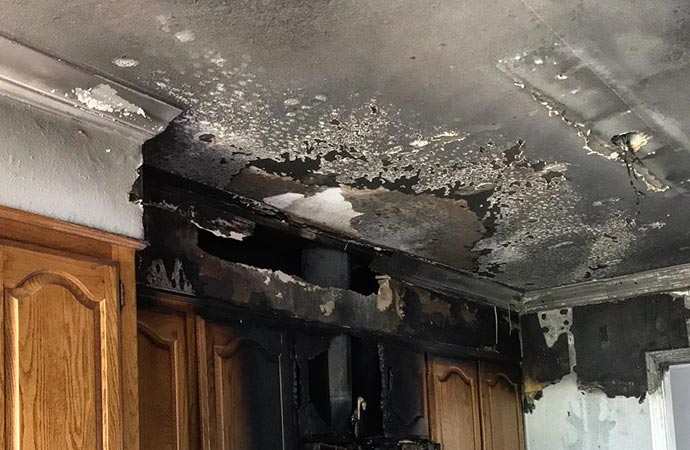
The materials that make up most Atherton homes are highly porous. Plaster walls, wood floors and trim, drywall, insulation, and ceiling textures all absorb smoke at different rates, but they all absorb it. Once smoke particles are embedded in these materials, surface-level cleaning does not reach them. This is the reason that odor returns after a seemingly thorough clean.
Older estate homes in Atherton, many of which have original plaster construction, hardwood floors, and finished attic spaces, present a particular challenge because the depth of porous material available for smoke absorption is greater than in newer construction. We assess penetration depth and choose treatment methods accordingly, which sometimes includes removing and replacing materials that cannot be decontaminated in place.
When smoke damage overlaps with fire damage restoration, the two services are handled together as a single project. The sequence, documentation, and insurance coordination are all integrated.
HVAC and Ductwork Decontamination
HVAC systems are a critical but often overlooked component of smoke decontamination. During a fire or significant smoke event, return air vents pull smoke directly into the duct system. Soot deposits inside ducts, on the air handler coil and blower, and on register covers throughout the building. When the system runs after a smoke event, it redistributes contamination to every room it serves.
We clean HVAC systems as a standard part of every smoke restoration project. That includes cleaning all supply and return ducts, treating the air handler components, replacing filters, and cleaning all registers and grilles. We test the system after cleaning to confirm airflow is not restricted and that no residual odor is present in the supply air.
In properties with whole-house ventilation systems, radiant heating, or other complex HVAC configurations common in higher-end Atherton estates, we assess the full system before beginning decontamination to ensure no components are missed. Persistent smoke odor after what seems like a thorough cleanup is almost always related to a duct system that was not cleaned, or to mold growth in damp areas that were affected by firefighting water.
Ozone Treatment and Thermal Fogging
Two professional methods reach smoke odor where surface cleaning cannot: ozone treatment and thermal fogging. Both are effective when applied correctly and used at appropriate concentrations.
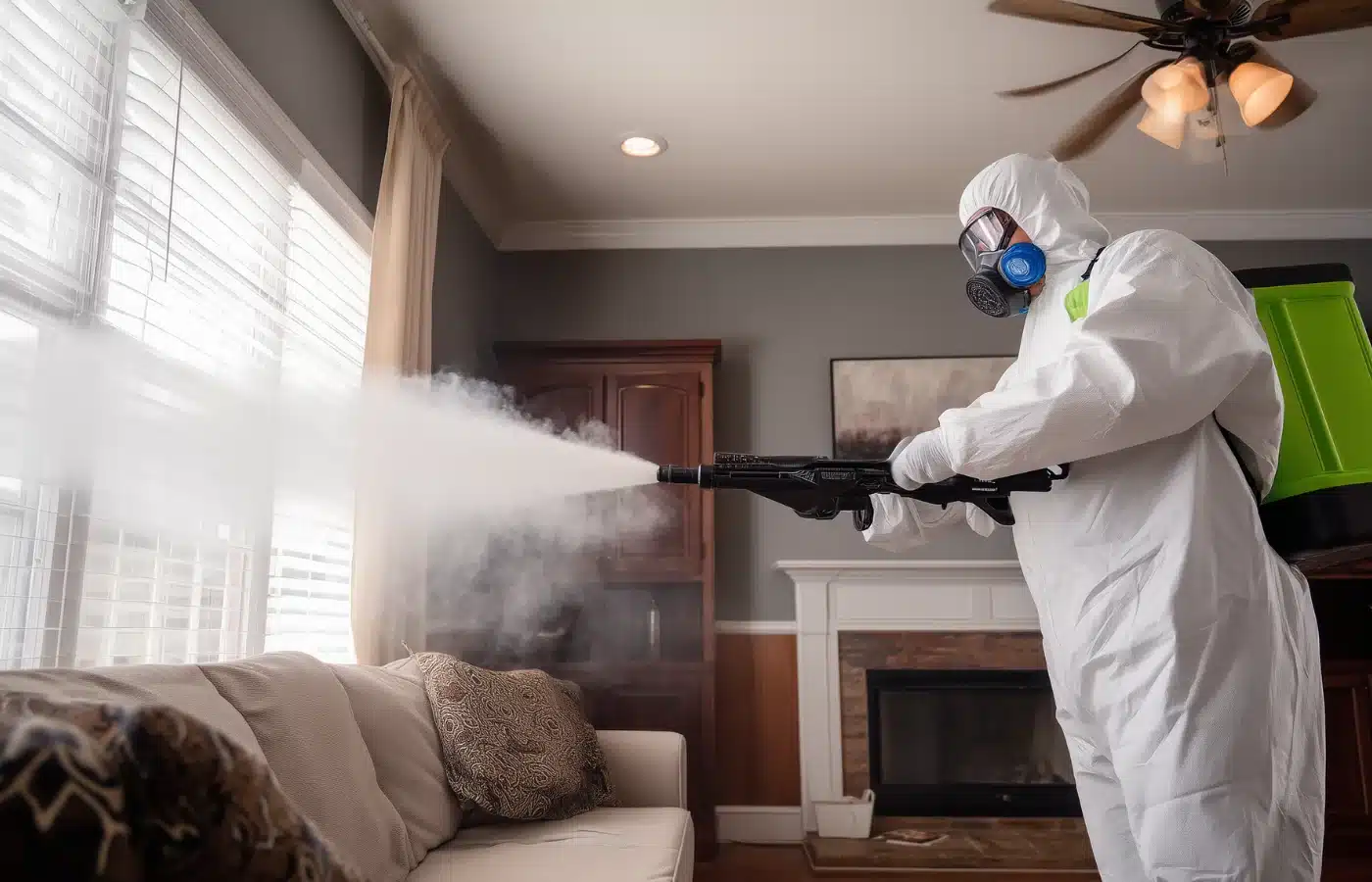
Ozone generators produce ozone molecules that react with smoke odor compounds at the molecular level, breaking chemical bonds and neutralizing odor at the source. Ozone treatment requires the building to be unoccupied during treatment and for a period afterward while ozone levels return to normal. It is effective on odors embedded in structural materials and in HVAC systems when introduced through the duct work.
Thermal fogging disperses a deodorizing agent as a fine fog that penetrates the same porous surfaces that smoke penetrated, reaching inside wall cavities, under flooring, and into attic spaces. It follows the same pathways smoke used to enter the structure. The fog neutralizes odor molecules on contact.
We use both methods in sequence when smoke contamination is severe. For less extensive events, we assess which approach is appropriate and apply it accordingly. What we do not do is mask odor with fragrance treatments. Masking does not remove smoke contamination. The odor returns.
What Gets Cleaned Versus What Gets Replaced
Not everything exposed to smoke can be cleaned. The decision between cleaning and replacement depends on the material type, the depth of contamination, and the cost comparison. Drywall that has absorbed smoke deeply is often more economical to replace than to treat in place. Hardwood floors can typically be sanded and refinished if the smoke penetration has not reached deep into the wood. Insulation almost always requires replacement because it cannot be decontaminated effectively in place.
Contents such as upholstered furniture, clothing, bedding, and soft goods are assessed individually. Some can be professionally cleaned and deodorized. Others cannot. We document all contents and their disposition for the insurance claim, which typically includes coverage for items that cannot be restored.
Smoke Damage Questions
Yes. If your home was exposed to heavy smoke from a nearby fire, particularly a structure fire or a wildfire producing concentrated smoke, the interior of your home may have absorbed smoke particles through ventilation systems, open windows, and even through the building envelope. Bay Area wildfire smoke events have been severe enough to cause measurable indoor air quality problems in Atherton and surrounding Peninsula communities. If your home has a persistent smoke smell after a nearby fire event, a professional assessment is warranted.
Without professional treatment, smoke odor embedded in building materials does not fully go away. It may become less noticeable over time as surface residue dissipates, but molecules bonded to porous materials continue to off-gas for months or longer, particularly during warm weather when materials expand and release trapped compounds. The only way to eliminate smoke odor reliably is professional remediation targeting both visible residue and embedded contamination.
No. Painting over soot-contaminated surfaces without proper cleaning first causes the paint to fail, and the odor will continue to migrate through the paint film. Even primer-sealer products that claim to encapsulate odor are not adequate substitutes for proper soot removal. The correct sequence is thorough surface cleaning, chemical sponge treatment, deodorization, and then paint. We complete the cleaning before any painting begins.
Potentially, yes. Some California homeowners insurance policies cover smoke damage to the structure and contents from a wildfire even if the fire did not reach the property. The claim depends on your specific policy language and documentation that the smoke damage occurred during a declared wildfire event. We document smoke contamination with the same level of detail we use for direct fire damage, which supports the insurance claim process.
Smoke Damage Restoration Service Area
We respond to smoke damage calls throughout Atherton, CA and a 50-mile radius including the following communities: