Water Damage Restoration Atherton CA | We Respond Fast
Water damage spreads every hour it is left untreated. Our team is on-site within two hours.
Call (650) 396-3526Quick Answer
Water damage restoration in Atherton typically takes three to seven days for professional drying, followed by one to four weeks for repairs depending on the extent of damage. Response within the first four hours prevents the most costly damage. Standing water left beyond 24 hours significantly increases mold risk and structural repair costs.
Water damage restoration in Atherton, CA addresses burst pipes, appliance failures, storm flooding, and any other water intrusion event that affects the structure, walls, floors, and contents of residential and commercial properties throughout the Peninsula. We serve homeowners and property managers throughout Atherton and the surrounding Bay Area communities who need a fast, certified response from a team that knows how to stop the spread of damage, complete the drying process correctly, and work with insurance carriers from initial assessment through final repair. When we finish, your property is fully dried, all moisture readings are within acceptable limits, and the structure and finishes are restored to pre-loss condition.
Why Response Time Is Everything
Water does not stay where it starts. It follows gravity and pressure, moving through floors, into wall cavities, under baseboards, and into sub-structural components within minutes of a breach. The longer it sits, the more categories of damage it creates. Within the first hour, flooring and drywall are absorbing water. Within 24 hours, wood framing begins to swell. By 48 hours, mold can begin establishing in saturated materials in the Bay Area’s ambient humidity.
Every hour that passes without professional extraction and drying adds to the total restoration cost. A leak discovered early that is treated within two to four hours often results in targeted drying and limited repair. The same leak found two days later routinely results in flooring replacement, drywall removal, and mold remediation on top of the base water restoration work.
The industry standards set by the IICRC for water damage restoration are based on exactly this dynamic. Fast response, correct categorization of water type, and systematic drying are the foundation of effective water damage restoration.
Our Six-Step Water Damage Restoration Process
- Emergency Contact and Dispatch: You call us at any hour. We confirm your address, ask a few quick questions about the source and extent, and dispatch a crew. Our target is to have technicians on-site in Atherton within two hours.
- Inspection and Water Categorization: We assess the damage, measure affected areas, and categorize the water source. Category 1 (clean water from a supply line) requires different protocols than Category 2 (gray water) or Category 3 (black water). This categorization determines what materials can be dried in place versus what must be removed.
- Water Extraction: We use truck-mounted extraction units for large losses and portable extractors for confined spaces. All standing water is removed before drying equipment is deployed.
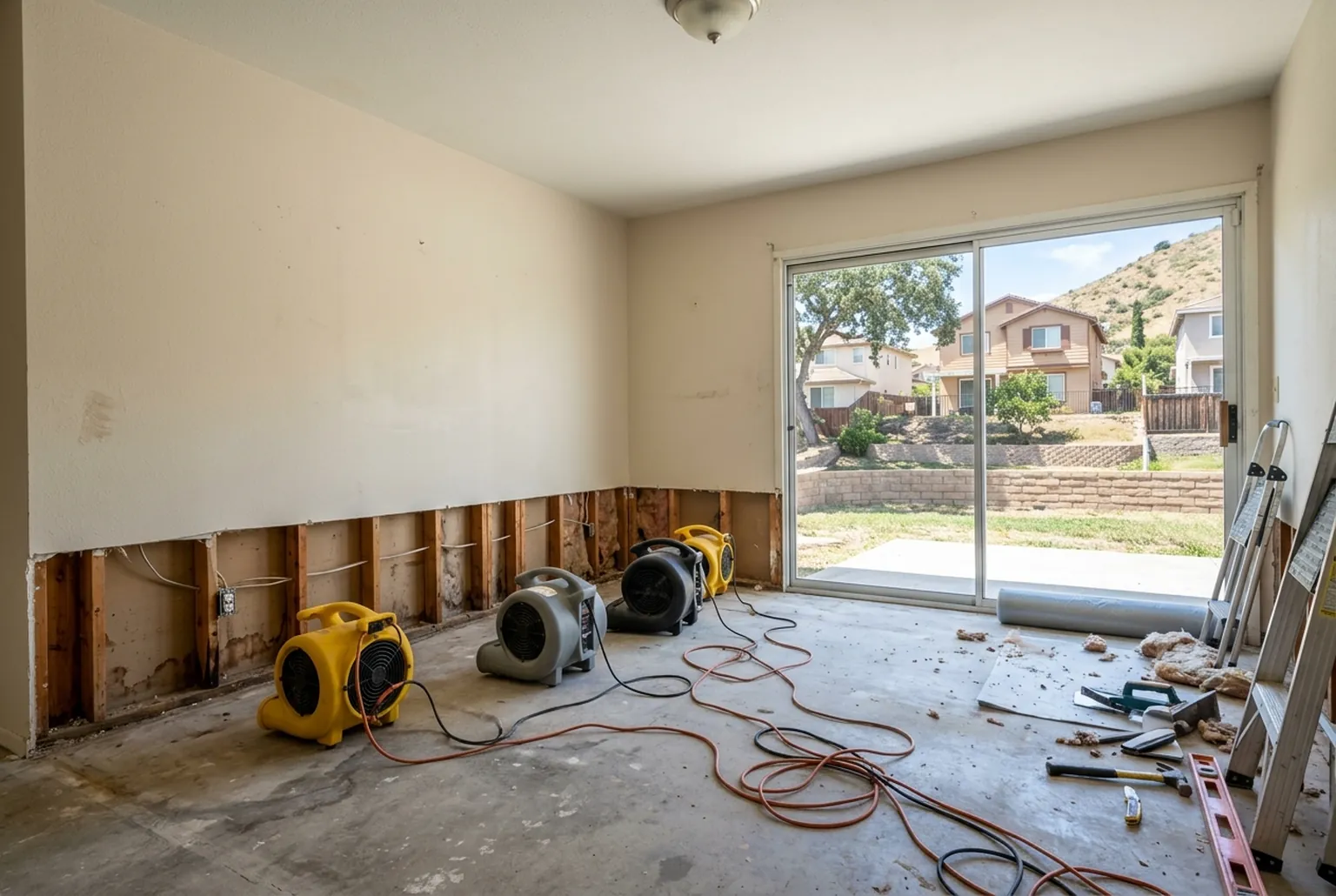
- Drying and Dehumidification: Commercial air movers and dehumidifiers are placed strategically to create a controlled drying environment. We calculate the number of units needed based on the volume of affected space and the material categories present.
- Daily Monitoring: We visit the property daily to take moisture readings at all monitored points and adjust equipment placement as the structure dries. We track progress toward the IICRC-defined drying goals and document every reading for the insurance file.
- Restoration and Repairs: Once all materials reach the target moisture levels, we remove drying equipment and begin reconstruction. That includes drywall replacement, insulation, flooring, baseboard, paint, and any other affected finishes.
Flooding Risks Specific to Atherton
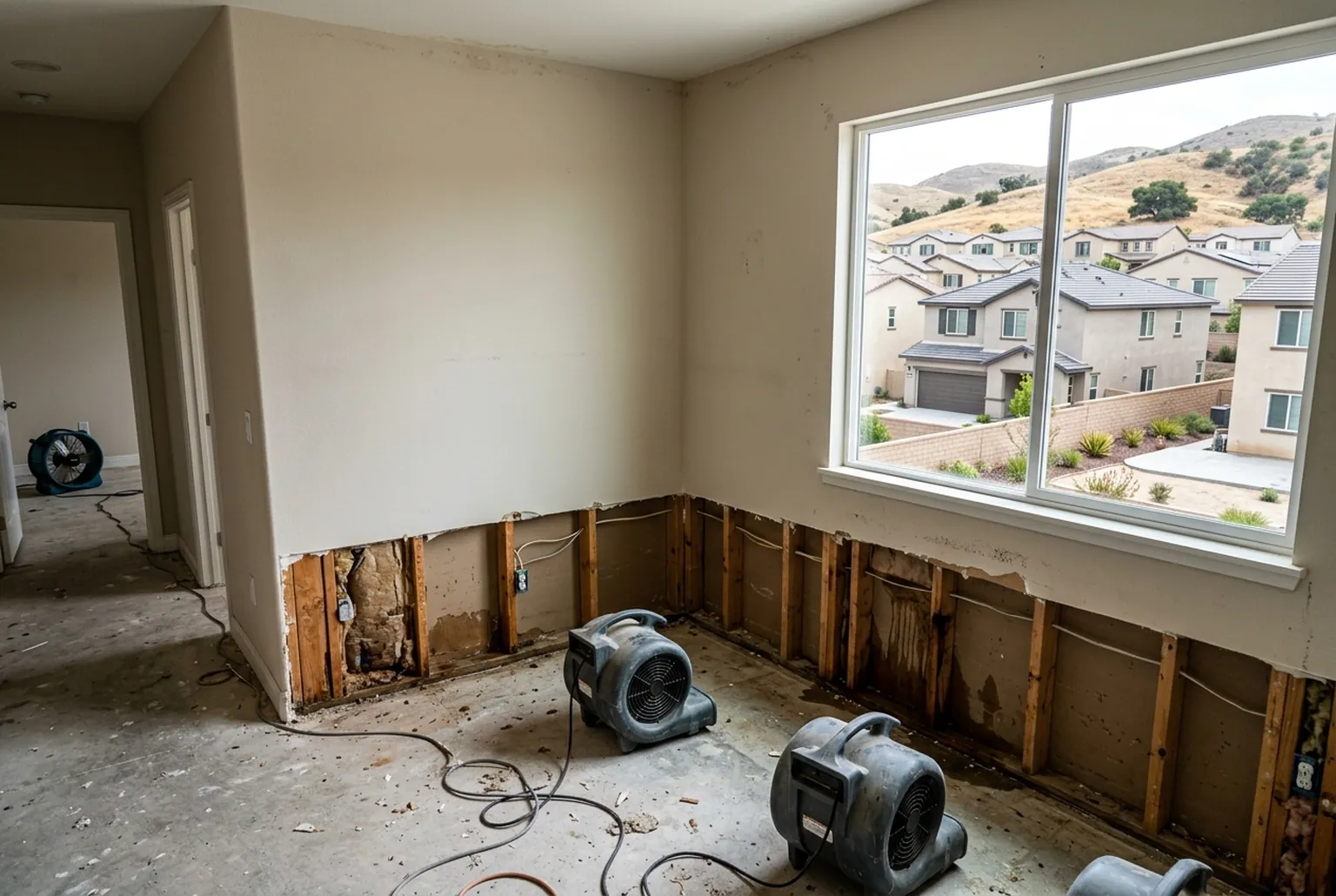
Atherton’s water damage risk profile is shaped by several factors that differ from properties farther inland. The community sits adjacent to San Francisquito Creek, which has a documented history of flooding during heavy rainfall events. Atmospheric river storms, which hit the Peninsula in concentrated bursts between November and March, can deliver two to four inches of rainfall in 24 hours. Atherton’s clay-heavy soils drain slowly, which means surface water accumulates quickly and can enter structures through foundation vents, crawl space walls, and below-grade access points.
Many homes in Atherton were built in the 1940s through 1960s and have copper plumbing that is now aged enough to develop pinhole leaks. These leaks often go unnoticed inside wall cavities for weeks before moisture migrates to a visible surface. By then, significant structural damage and mold growth have already occurred.
We understand these local patterns and address them in every assessment. If you are dealing with storm-related flooding, we can also coordinate directly with storm damage restoration protocols to ensure nothing is missed.
Insurance Workflow for Water Damage Claims
Standard homeowners insurance in California covers sudden and accidental water damage. That includes burst pipes, appliance failures, and sudden roof leaks. What it typically excludes is gradual leakage that was known and ignored, ground flooding from outside the property, and sewer backup unless a specific rider is on the policy.
We work with your insurance carrier directly. We document the loss with photos, moisture maps, and equipment logs that meet carrier documentation standards. We submit the initial damage scope and work with the adjuster through the approval process. If there is a dispute about scope or pricing, we have the documentation to support the claim. Our goal is to get the authorization resolved quickly so the drying and repair work does not stall.
You can review general flood insurance guidance at ready.gov/floods, which explains the difference between standard homeowners flood coverage and FEMA’s National Flood Insurance Program policies.
Water Damage Questions
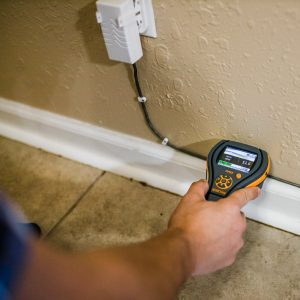
Moisture meters and thermal imaging cameras let us see inside wall cavities without opening them up. We take readings at multiple points along affected walls and compare them to reference readings from unaffected areas. Any wall section with elevated moisture is a candidate for further investigation. This is not something you can determine by eye or touch alone.
Consumer fans move air but do not remove moisture from the air. Without dehumidification, you are simply moving humid air around a space that remains saturated. IICRC-certified drying requires a specific ratio of air movers to dehumidifiers calibrated to the volume of the space and the type of materials being dried. Using fans alone typically results in extended drying times, inadequate moisture removal from structural materials, and mold growth in wall cavities and under flooring.
Category 3 water is grossly contaminated water from sewage backup, flooding from outside the property, or any water that has been standing long enough to absorb bacteria. It cannot be treated with drying alone. Affected porous materials including drywall, insulation, and carpet must be removed and disposed of properly because they cannot be safely restored. Category 3 work involves full containment, PPE for technicians, and disposal protocols that add to the project scope.
It depends on the floor type, the category of water, how long it was wet, and whether the sub-floor was also affected. Hardwood floors can often be saved with aggressive drying if treated quickly. Engineered hardwood and laminate are more vulnerable and usually require replacement if saturated. Tile floors themselves rarely need replacement, but the sub-floor and adhesive often do if water got underneath. We assess each material and give you a specific recommendation based on moisture readings and industry protocols.
Water Damage Restoration Service Area
We respond to water damage emergencies throughout Atherton, CA and a 50-mile radius including the following communities: